Water Pressure Too Low or Too High? Causes and Fixes (Pressure Reducer, Booster Pump)
Two Opposite Problems, One Question: Pressure
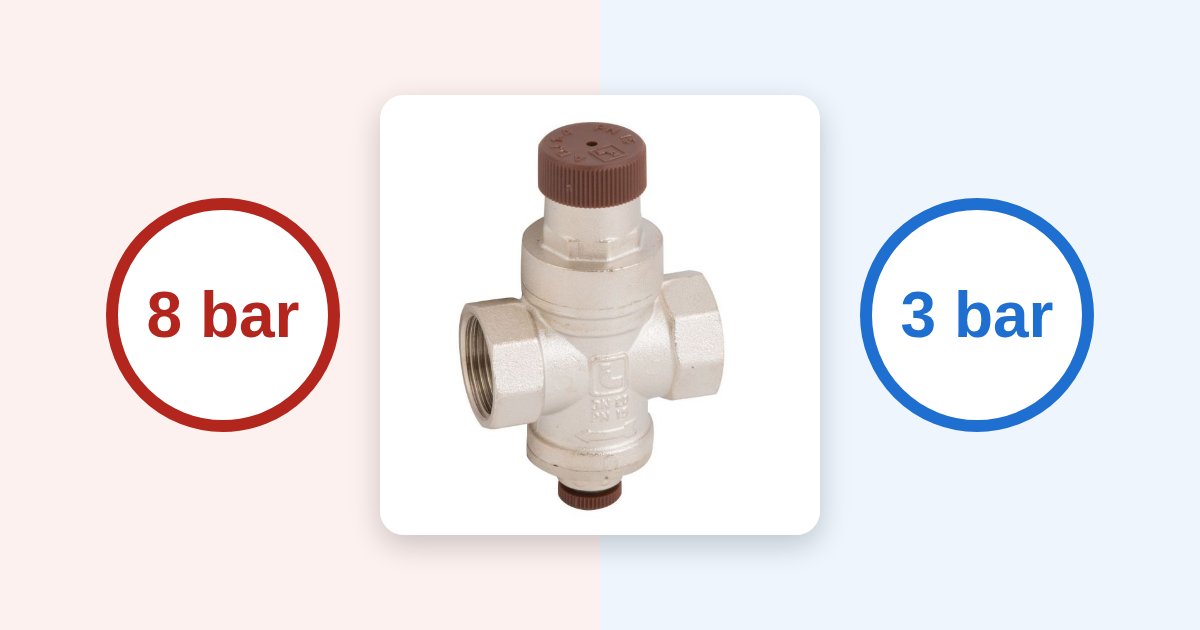
In a home, the right water pressure is around 3 bar (2.5 to 3.5 bar). Below that, the tap trickles and showers are a chore. Above it, the water comes out strong, but it quietly wears out the whole system.
In Tunisia you'll find both, sometimes in the same town: an upper floor or a rooftop tank lacks pressure, while a house at the low end of the network can get very high pressure, especially at night when nobody is drawing water.
This guide helps you work out which case you're in, then pick the right fix.
How to Measure Your Pressure
The simplest way: a screw-on pressure gauge (a few dinars at any hardware store) on the washing-machine tap or a garden tap.
- Close every tap in the house.
- Screw on the gauge and open the tap fully.
- Read the value. Measure again in the evening or at night, when network pressure is highest.
| Reading | Diagnosis |
|---|---|
| Below 1.5 bar | Pressure too low |
| 2.5 to 3.5 bar | Ideal, nothing to do |
| Above 4–5 bar | Pressure too high: a reducer is recommended |
Low Pressure: 6 Causes to Check
Before buying a pump, rule out the simple causes:
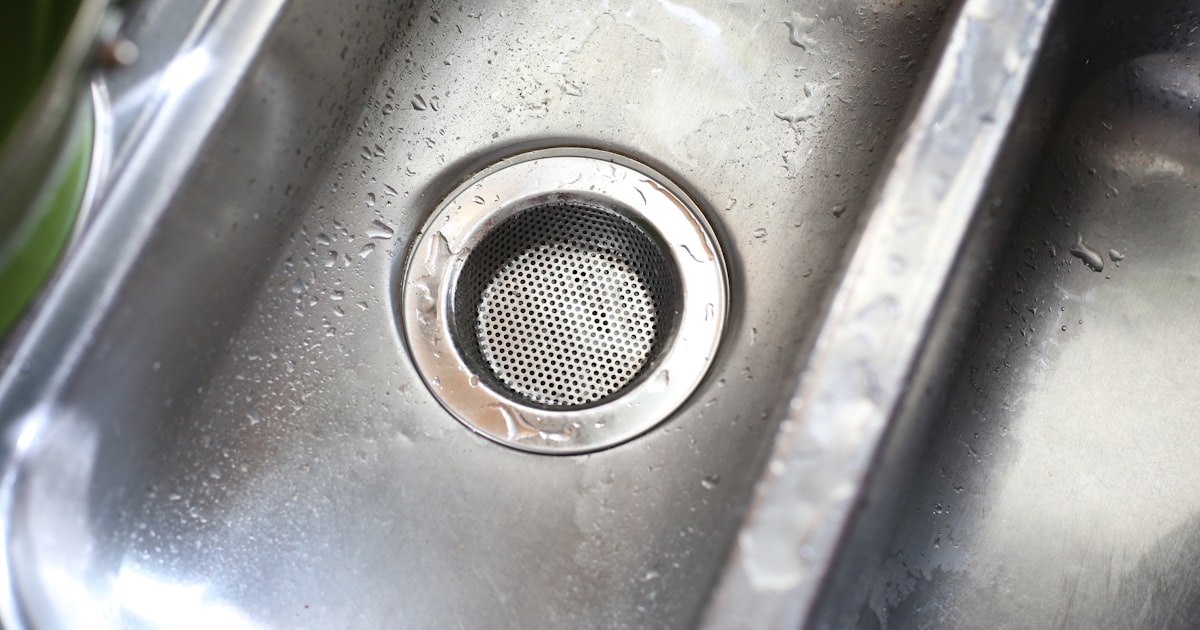
- Scaled-up aerator: unscrew the tap tip and clean it in white vinegar. See our guide to descaling a tap.
- Half-closed stop valve: after building work it's often left partly shut.
- Clogged filter: a blocked inlet-filter mesh slows the water. A quick flush fixes it.
- Leak: a meter that turns while everything is closed means a leak is stealing pressure.
- Weak network or water cuts: if the whole neighbourhood lacks pressure, the problem is the network, not your house.
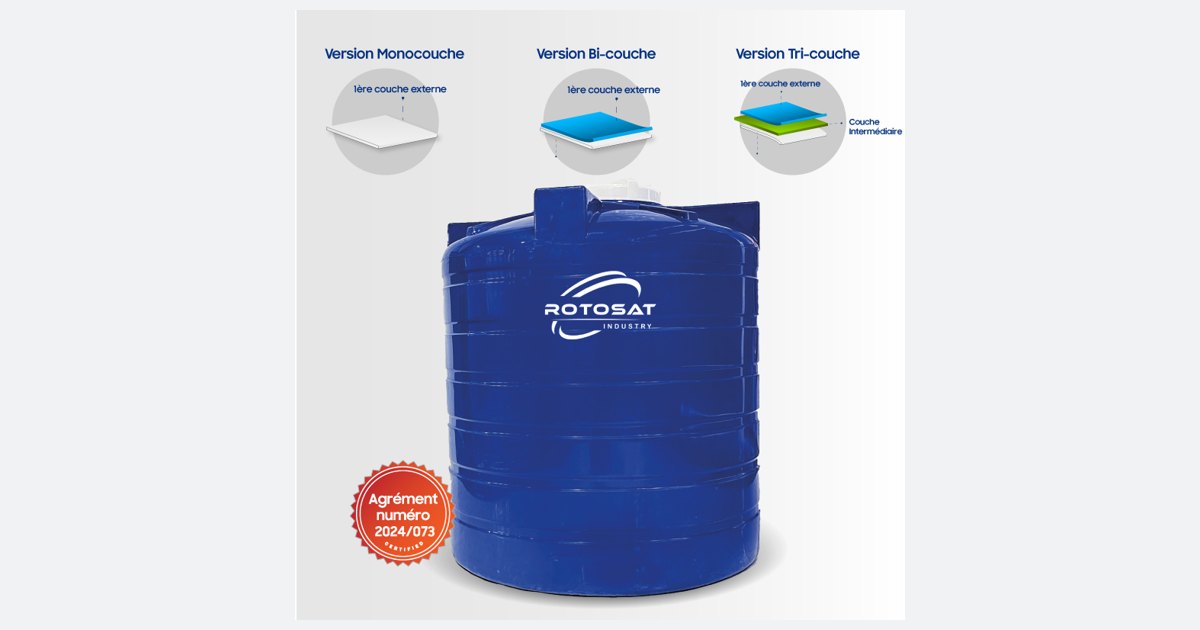
- Rooftop tank (gravity feed): a tank a few metres above the taps only gives 0.2 to 0.5 bar. That's normal; it's physics.
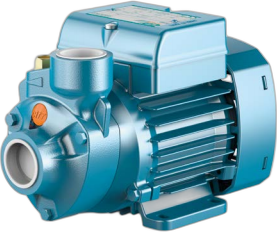
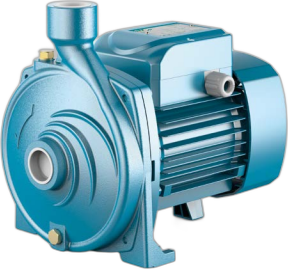
The lasting fix for cases 5 and 6: a booster pump. A pump with a press-control draws water from the tank and pushes it through the house at steady pressure. To pick the power, read which booster pump to choose, and for installation, installing an automatic booster pump.
Pressure Too High: the Tell-Tale Signs
High pressure doesn't show right away, but it leaves traces:
- Water hammer: a "clack" in the pipes when a tap is closed quickly or the washing machine shuts off.
- Water-heater safety valve dripping all the time.
- Toilet cistern running non-stop: the float valve can't close anymore.
- Hoses swelling or bursting, mixer cartridges leaking early.
- Taps that splash as soon as you open them a little.
Every extra bar tires out seals, cartridges and appliances. And a hose that bursts while you're away can flood a room.
The Fix: a Pressure Reducer
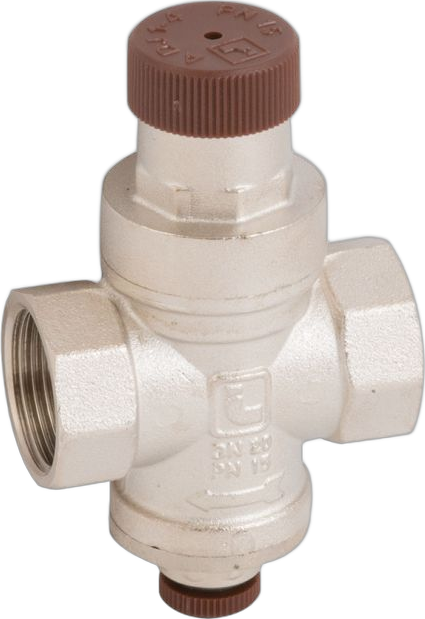
A pressure reducer screws onto the main water inlet. It lowers and stabilises the pressure to the set value (usually 3 bar), whether the network sends 5, 8 or 10 bar.
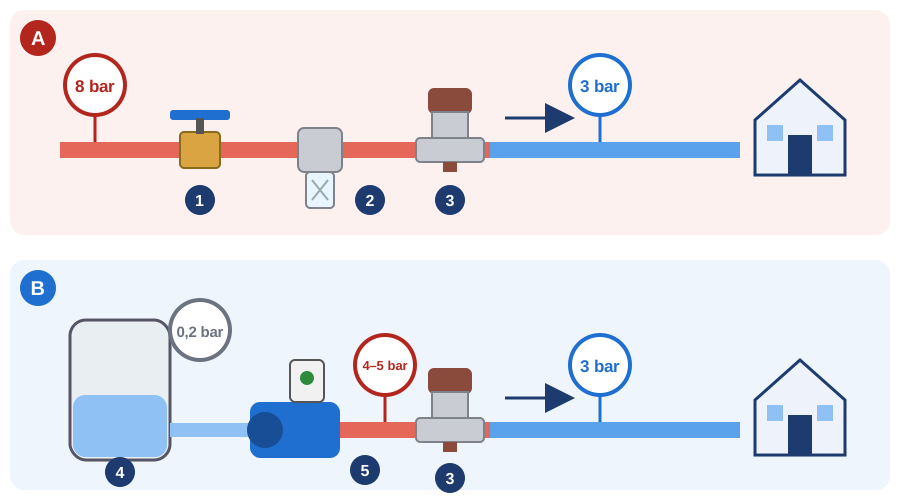
Case A, network pressure too high: stop valve ① → filter ② → reducer ③ → house at 3 bar.
Case B, tank + booster pump: tank ④ → pump with press-control ⑤, which can reach 4–5 bar → reducer ③ → house at 3 bar. Here the reducer is optional: useful if the pump pushes too hard for your appliances.
How Does It Work?
Inside, a spring pushes to open a valve, and the house-side pressure pushes a piston to close it. When you open a tap, house pressure drops, the spring wins and water flows. When everything is closed, pressure rises to 3 bar and closes the valve. It works without electricity, all by itself.
The knob on top sets the pressure: tighten for more, loosen for less.
Installing It Right
- Just after the meter and stop valve, before the water heater and the rest of the house.
- Follow the arrow cast on the body: it shows the water direction.
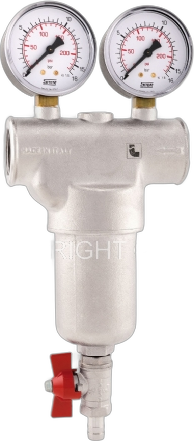
- Fit a filter before the reducer: a grain of sand stuck in the valve makes it leak or drift. Our 3/4" self-cleaning filter flushes clean with no cartridge to buy.
- Don't fit it on a gravity-fed tank: pressure there is already low, and a reducer would only cut the flow.
At Sanitech we stock the ITAP 360 3/4" pressure reducer: nickel-plated brass body, up to 15 bar inlet, adjustable outlet from 1 to 4 bar (factory set at 3 bar).
Frequently Asked Questions
What is the right water pressure for a house? About 3 bar, between 2.5 and 3.5 bar. Enough for a comfortable shower without straining the plumbing or appliances.
Does a pressure reducer lower the flow? Very little, if it's the right size (3/4" for a house). It caps the maximum pressure, not the amount of water available.
Do I need a reducer if I have a booster pump? Not always. The press-control already limits the pressure. A reducer helps if the pump exceeds 4 bar and you want to protect a water heater or fragile hoses.
Why is my water heater's safety valve dripping? Often because the inlet pressure is too high. The valve opens to protect the tank. A reducer before the water heater usually solves it.
Does a pressure reducer wear out? It lasts for years. If house pressure slowly creeps up while everything is closed, the valve is dirty or worn: clean it or replace the reducer.
In Summary
- Pressure too low: check the aerator, valve, filter and leaks first. If the problem is the network or a tank, install a booster pump.
- Pressure too high: install a pressure reducer after the meter, with a filter before it.
- Target: about 3 bar throughout the house.
Sanitech, in Siliana, delivers across Tunisia with cash on delivery. Unsure about your setup? Call us on +216 55 793 122.