Which Booster Pump Should You Choose for Your Home or Water Tank?

Why Your Tap Doesn't Have Enough Pressure
A toilet cistern that takes forever to fill, an upstairs shower that trickles instead of flowing, a kitchen tap that loses all its force the moment someone opens the bathroom tap too: weak pressure is a very common problem in Tunisian homes.
The causes are often linked: a public network that arrives with low pressure in some neighbourhoods, a tank installed at ground level (garage, yard, utility room) without the height needed to create pressure by gravity, or a multi-storey house where water still has to "climb" after leaving the tank.
A booster pump solves this: it takes water from its source (the network, a tank, or a shallow well) and pushes it through your pipes at the pressure you need. This guide helps you choose the right power, between 0.5 HP and 1 HP, based on your home and how you'll use it.
When Do You Actually Need a Pump?
Before choosing a model, make sure the problem really is pressure and not something else (a leak, a blocked pipe, a limited water meter). A booster pump is the right solution in these cases:
- Ground-level tank: without height, water won't reach the taps on its own — it needs to be pushed.
- Upper floors: the higher you go, the more pressure drops; a multi-storey villa often needs a boost.
- Weak public network: in some areas or at peak hours, network pressure just isn't enough.
- Shallow well: the pump lifts the water and pressurises it at the same time.
If your issue is limited to one tap, check the tap itself first before investing in a whole-house pump.
0.5 HP or 1 HP: How to Choose the Right Power
This is the central question, and it comes down to one thing: how much water do you want to be able to draw at once, and over what distance/height?
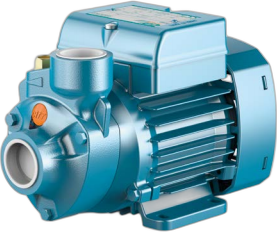
0.5 HP pump (like our IP500M City Pumps)
- Flow up to 40 L/min, discharge head up to 40 m.
- Well suited to everyday household use: boosting one or two weak taps, feeding a single- or two-storey home, lifting water from a nearby tank.
- Compact and light (5.2 kg), easy to install in a utility room or near the tank.
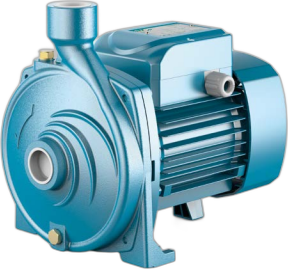
1 HP pump (like our IC100 City Pumps)
- Flow up to 90 L/min, more than double the 0.5 HP model, with discharge head up to 36 m.
- Built for homes with several water points that might run at the same time (multiple bathrooms, kitchen + shower + washing machine), more floors, or a longer distance between the tank and the taps.
- Stainless steel AISI 304 impeller, more durable over time than the brass impeller on the 0.5 HP — a plus for heavy use.
Simple rule of thumb: if you mainly want to fix one weak point or feed a modest home, the 0.5 HP is more than enough. If your home has several floors, several bathrooms, or several taps/appliances that often run together, the 1 HP holds pressure better under heavy demand. When in doubt, a pump slightly above your needs beats one that struggles.
Self-Priming: Why It Matters When Pumping From a Tank
When the pump isn't sitting directly in the water but draws from a ground-level tank or a shallow well, it needs to be able to create the necessary suction on its own to start, even if some air is trapped in the pipe: this is what's called a self-priming pump.
This is a feature to check whenever the pump sits higher than the water level it draws from — the typical case for a ground-level tank. Both our models are built for suction lift (up to 8 m for the 0.5 HP, up to 7 m for the 1 HP), which covers most everyday home installations comfortably. For reliable suction over time, keep the suction hose airtight (no air leaks) and fit a non-return valve at the tank end.
Typical Uses
- Boosting network pressure: one or two taps that lack force.
- Feeding from a tank: whether the tank is on the ground or on the roof with insufficient flow, the pump keeps pressure steady at the taps.
- Garden watering: both models handle this well, with the 1 HP more comfortable on a long hose or a sloped garden.
- Shallow well: lifting and pressurising water in one operation.
Where and How to Install the Pump
- Place the pump as close as possible to the tank or suction point, on a stable surface sheltered from direct rain.
- Leave easy access for maintenance (draining, cleaning the filter if fitted).
- Respect the maximum suction lift stated (8 m for the 0.5 HP, 7 m for the 1 HP): beyond that, performance drops off.
- If the pump feeds the whole house, sizing slightly up (1 HP instead of 0.5 HP) avoids pressure drops when several taps open at once.
- For a clean, safe installation, call a plumber if you're not comfortable with the electrical and hydraulic connections.
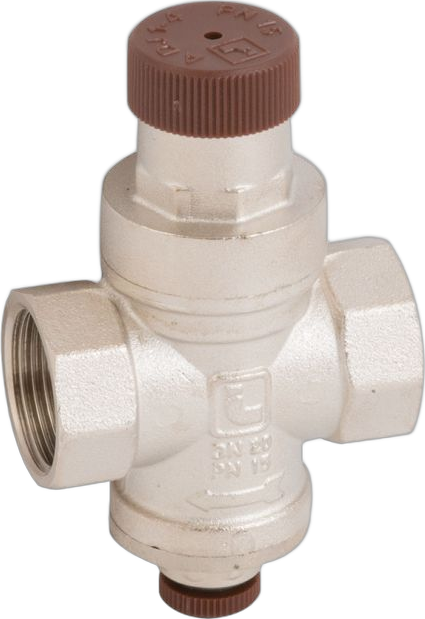
- Powerful pump, fragile plumbing? A 1 HP pump can exceed 4 bar. A pressure reducer after the pump brings the house back to 3 bar and protects the water heater and hoses. See water pressure too low or too high.
What to Check Before Buying
- Do the flow rate (L/min) and discharge head (m) match your intended use? (see the comparison above)
- Does the pump's suction lift cover the distance between the pump and the lowest water level in your tank or well?
- Are the body and impeller suited to durable household use? (epoxy-coated cast iron with a brass or stainless impeller, depending on the model)
- Does the pump restart on its own after a water or power cut, or does it need manual re-priming?
- Are the fittings (pipe diameter, threading) compatible with your existing setup?
Factors That Affect the Price
- Power and flow: a 1 HP pump costs more than a 0.5 HP, since it delivers significantly more water per minute.
- Impeller material: stainless steel (as on the IC100) holds up better over time than brass, which is reflected in the price.
- Brand and motor reliability: a well-protected, quality single-phase motor lasts longer and avoids costly breakdowns.
Prices change regularly: check the up-to-date price directly on the product page. You'll find the full range on our pumps page.
Maintenance: Keeping Your Pump in Good Shape
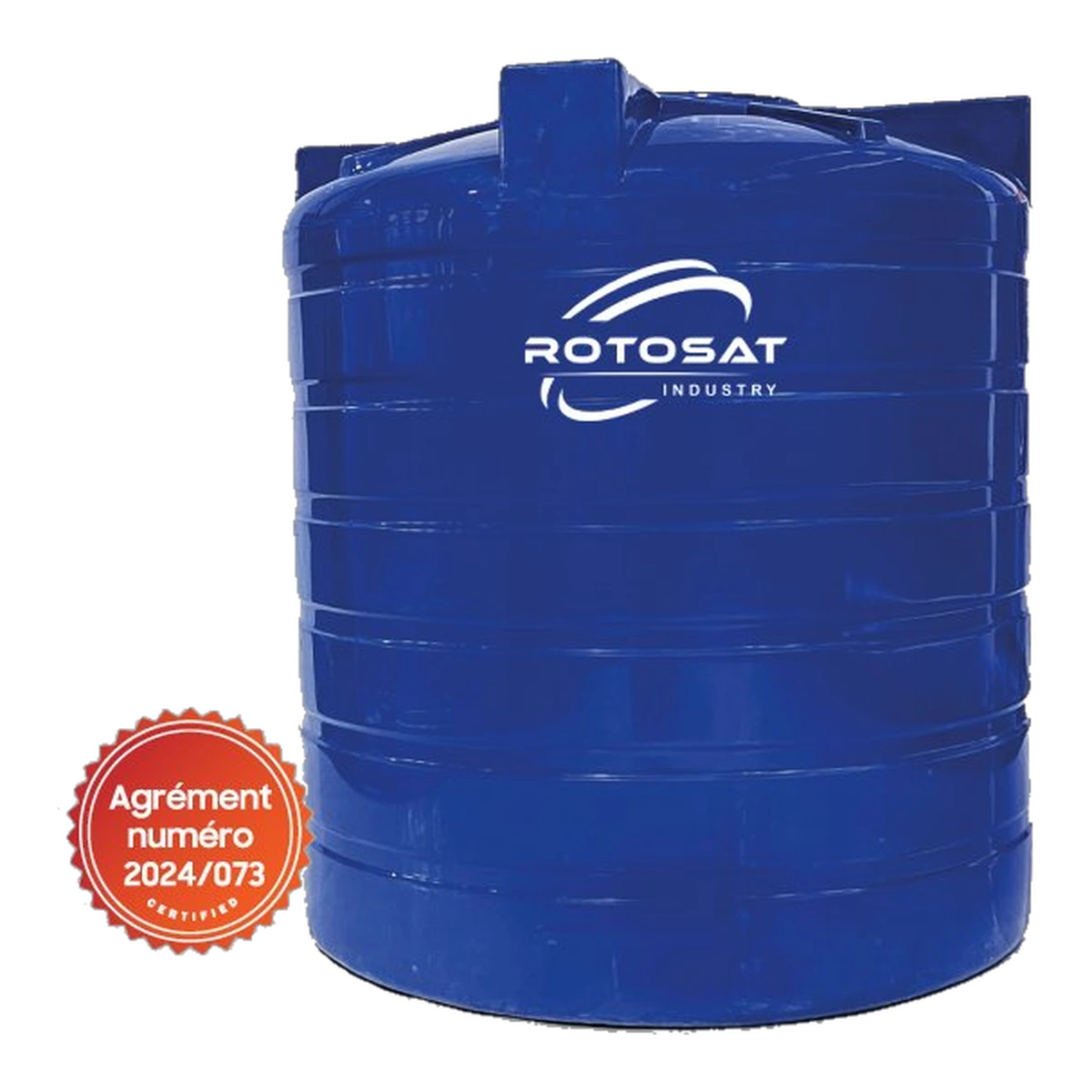
A well-maintained pump lasts for years. A few simple habits: check regularly for leaks at the fittings, keep the suction hose clean and airtight, and avoid running the pump dry (without water) — this wears out the seal and impeller prematurely. If you're feeding your home from a tank, also factor in maintenance of the tank itself: our guide how to choose a water tank in Tunisia covers sizing and upkeep of the reservoir.
In Summary
A booster pump solves most weak-pressure problems, whether the water comes from the network, a ground-level tank, or a shallow well. For everyday household use or a modest home, the 0.5 HP is enough; for a multi-storey home or several water points running at once, go for the 1 HP. Either way, check the suction lift against your installation.
At Sanitech, in Siliana, we offer the City Pumps IP500M (0.5 HP) and IC100 (1 HP), with delivery throughout Tunisia and cash on delivery. Not sure which model you need? Our team advises you at +216 55 793 122.