How to Clean and Maintain Your Water Tank for Safe Water
Why Cleaning Your Tank Matters
Water stored in a tank is never completely still or completely protected. Over time, several things build up inside:
- Sediment: sand, dust and particles settle at the bottom and form a sludge.
- Algae: as soon as light gets into the tank, green micro-algae develop and turn the water cloudy with an off smell.
- Biofilm: a thin, slimy layer of bacteria that coats the walls. It's the sneakiest one, because it isn't always visible.
A neglected tank can change the taste of your water, discolour it and, in the worst cases, make it unsafe to drink. Regular maintenance isn't a luxury — it's what guarantees the water coming out of your tap stays safe.
How Often Should You Clean?
As a rule, clean your tank about twice a year. In Tunisia, the ideal timing is:
- Once before summer (April–May), when the heat encourages algae growth.
- Once in autumn, after the hottest season.
If you notice a change in taste, cloudy water or a visible deposit, don't wait for the scheduled date — clean it straight away.
How to Clean Your Tank: Step by Step
1. Empty the Tank
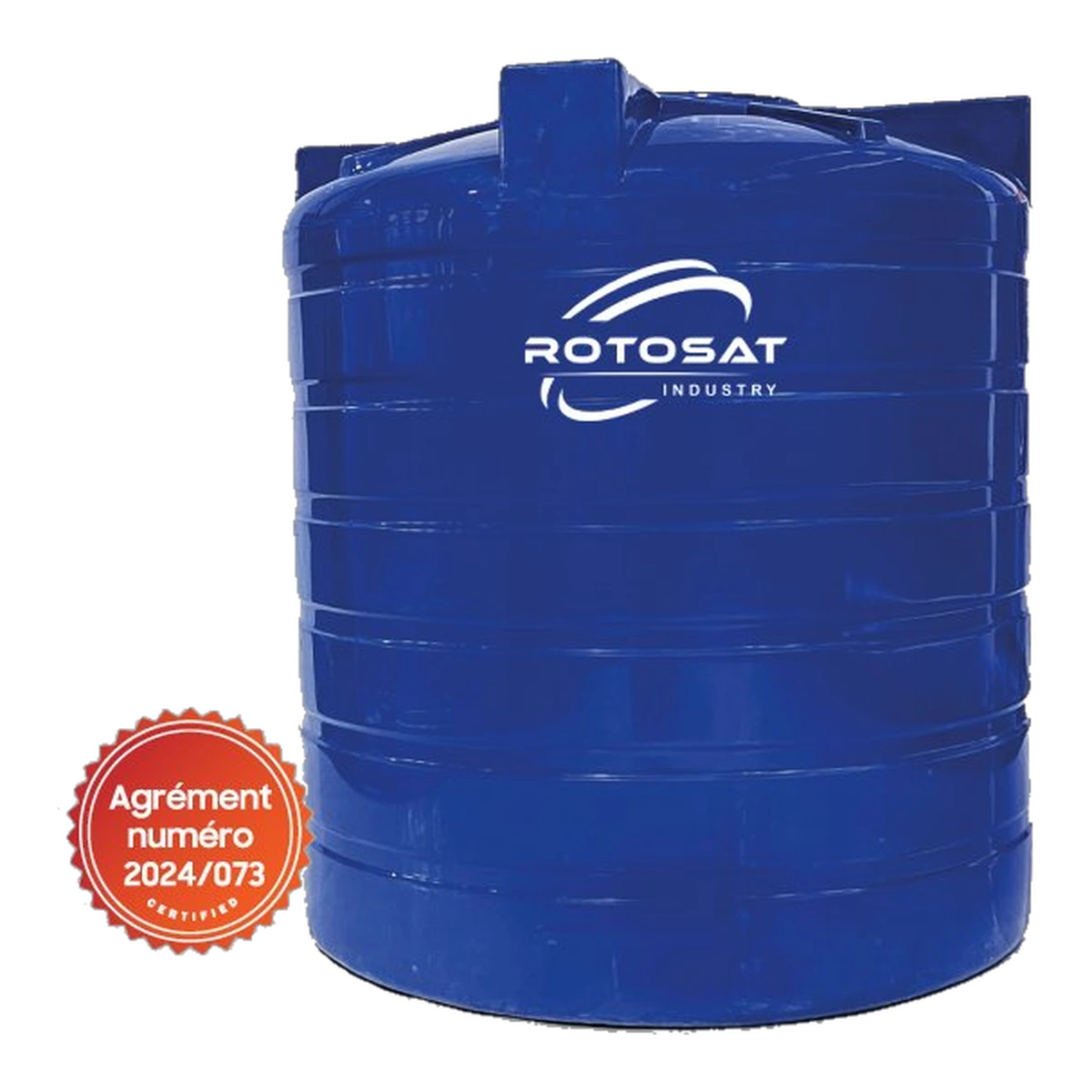
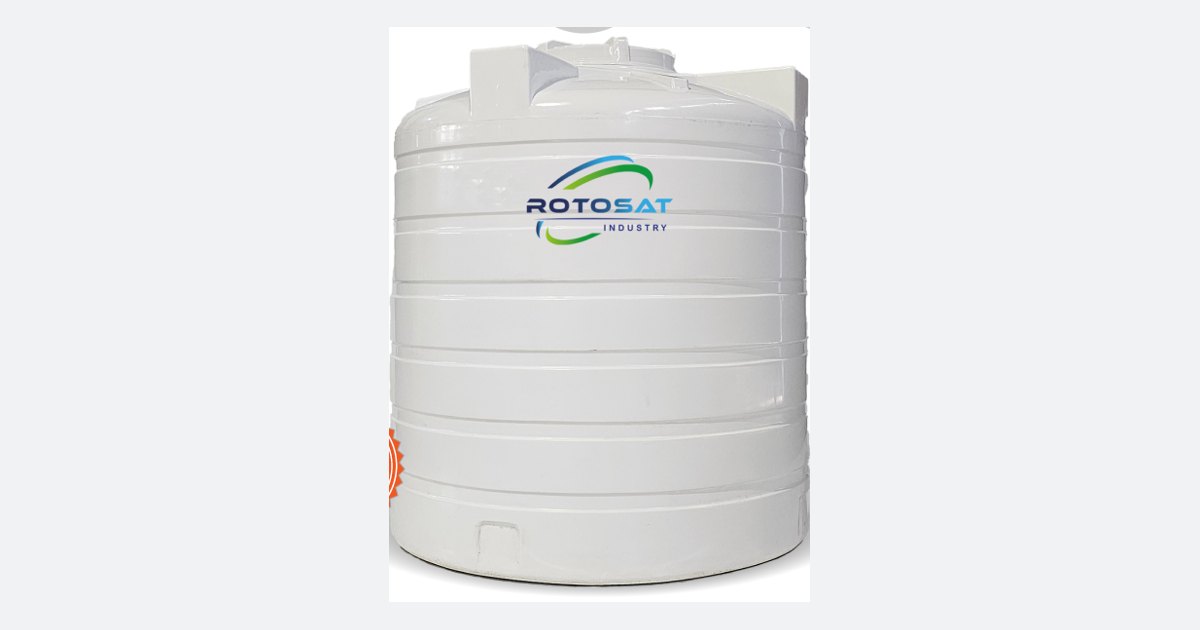
Shut off the water supply, then drain the tank. This is where a PVC drain valve at the base makes all the difference: on our Rotosat Industry vertical tanks, it lets you empty all the water and bottom sludge easily, without bailing by hand.
Scoop out the last few centimetres of muddy water with a bucket or sponge.
2. Scrub the Walls
With a soft-bristled brush (never metal, which would scratch the plastic), scrub the walls, the bottom and the lid. Focus on any areas showing a greenish deposit or a slippery film — that's the biofilm.
Do not use abrasive products or perfumed detergents, which would leave residues in the water.
3. First Rinse
Rinse thoroughly with clean water and drain through the valve. Repeat until the water running out is perfectly clear.
4. Disinfect
Prepare a diluted chlorine solution (plain, unscented bleach with no additives). The goal is a lightly chlorinated water that kills bacteria and any leftover biofilm.
- Dilute the chlorine in clean water.
- Spread the solution over all the walls with a clean sponge.
- Let it work for one to two hours.
Good to know: these are common-sense guidelines, not an official medical dosage. If you have any doubt about drinking-water safety, follow the instructions of your local health authorities.
5. Final Rinse — Thoroughly
This is the most important step. Rinse several times with clean water until there is no chlorine smell left at all. Drain through the valve each time. Water that still smells of bleach is not ready to drink.
Then close the tank and let it refill normally.
Safety Tips
- Ventilate if your tank is in an enclosed space: chlorine fumes are irritating.
- Wear gloves and keep chlorine away from your eyes.
- Never mix bleach with other products (especially an acid descaler): the mixture releases a toxic gas.
- If the tank is large or up high, get help and secure your access.
Keeping Water Safe Between Cleanings
A good clean is only half the job. The other half is preventing re-contamination:
- Keep the lid firmly closed at all times, to block dust, insects and leaves.
- Choose an opaque tank that blocks light. This is decisive against algae: our triple-layer (tricouche) tanks have a central layer that stops light passing through, which strongly limits green growth. It's a real advantage over translucent plastic.
- Avoid direct sunlight. Water that heats up favours bacteria and algae. Place the tank in the shade wherever possible.
- Check regularly that there's no deposit at the bottom and that the water has no off smell.
For water that stays protected all year, the winning combo is an opaque tank, kept closed and in the shade — like our 1000 L triple-layer vertical tank for larger needs, or the 250 L white tank for a backup water point.
When Should You Replace the Tank?
Cleaning isn't enough if the tank itself is at the end of its life. Replace it if you notice:
- Cracks or hairline cracks, however small: they let in light and contaminants.
- Deformation or bulging of the tank.
- Persistent taste or odour that keeps coming back despite proper cleaning.
- Old, non-food-grade plastic: older tanks weren't always made from material suitable for drinking water. When in doubt, replace it.
Our tanks are made of UV-treated, 100% food-grade PEHD, certified by the Tunisian Ministry of Health (approval 2024/073). In practice, this means the plastic doesn't leach anything into your water — it's the peace of mind of safe water, from filling right through to the tap.
Going Further
If you're unsure which tank to choose, read our water tank buying guide for Tunisia and our comparison of single-layer, double-layer and triple-layer tanks. Finally, to keep water at home during outages, read managing a water cut with your tank.
At Sanitech (Siliana), we deliver across Tunisia with cash on delivery. We keep in stock the 1000 L triple-layer (blue), the 500 L single-layer (white) and the 250 L single-layer (white). A question about maintaining or choosing your tank? Get in touch.