How to Choose a Water Tank in Tunisia: The Complete Guide
Why a Water Tank Is Essential in Tunisia
Water cuts are part of daily life in many Tunisian regions. Whether it's summer pressure drops, network maintenance, or areas where water only runs a few hours a day, being caught without water at the wrong moment is frustrating.
A storage tank solves this simply: it fills up when water is flowing and keeps a reserve for when the network is cut. You keep cooking, washing, and cleaning without interruption.
This guide explains how to choose the right tank: the capacity for your household, the right material, where to install it, and what to check before buying.
How to Calculate the Right Capacity
This is the most important question — and the easiest to solve with a quick calculation.
The basic rule: one person uses about 150 litres of water per day (drinking, cooking, showering, toilet, cleaning, laundry). Multiply that by the number of people and by the days of autonomy you want.
Capacity = number of people × 150 L × days of autonomy
Here are concrete benchmarks:
| Household | Use per day | 2-day autonomy | 3-day autonomy |
|---|---|---|---|
| 1–2 people | ~300 L | 500 L | 750–1000 L |
| 3–4 people | ~600 L | 1000 L | 1500–2000 L |
| 5–6 people | ~900 L | 1500–2000 L | 2000 L+ |
Practical tips:
- If cuts in your area are frequent or long, size up. A slightly large tank beats one that's too small.
- Consider usage: a garden to water, a washing machine, or several bathrooms all raise consumption.
- A backup tank (250 to 500 L) is enough for a small home or a studio. For a family villa, start at 1000 L or more.
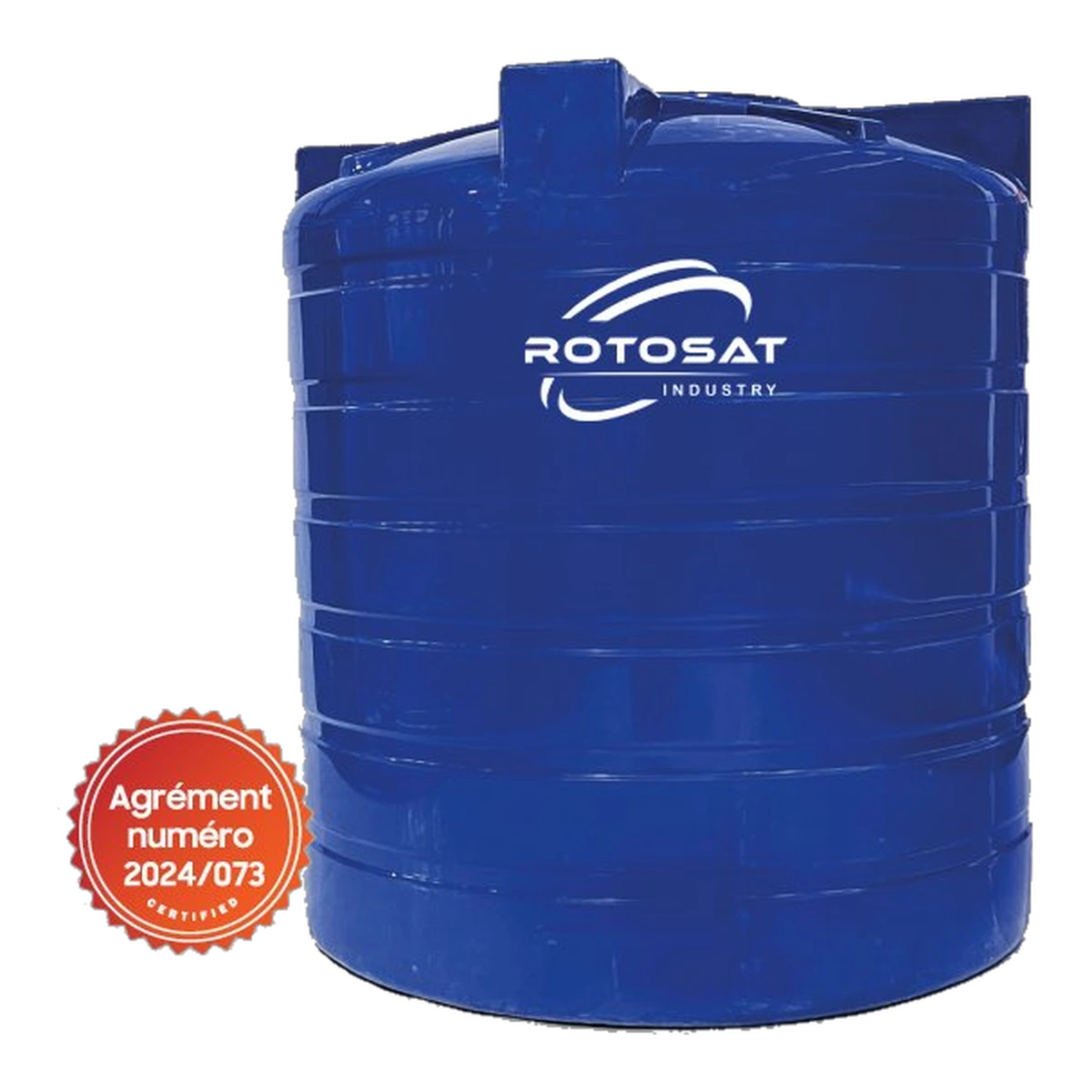
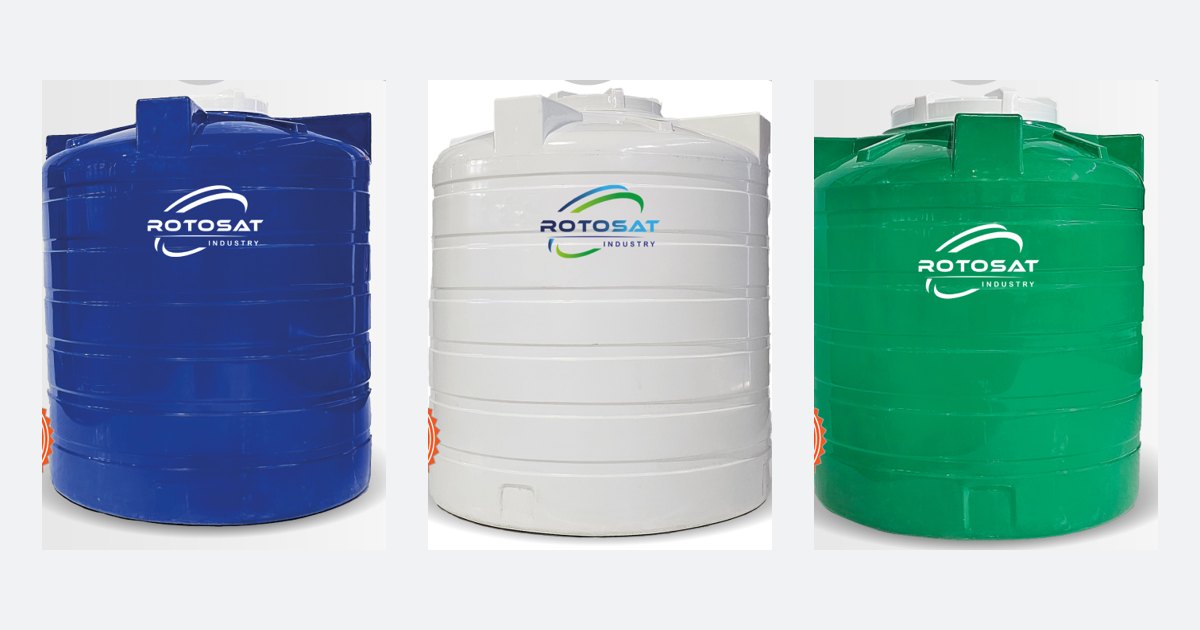
Our range spans 150 L to over 2000 L, so there's a size for every situation. For a couple, the 500 L single-layer white tank is a good starting point; for a family, the 1000 L three-layer blue tank offers a comfortable reserve.
Single, Double, or Triple Layer: Which to Choose?
You'll often see the terms single-layer (monocouche), double-layer (bicouche), and triple-layer (tricouche). This is the number of plastic layers that make up the tank wall.
- Single-layer: one layer. Economical, great for everyday use out of direct sunlight.
- Double-layer: two layers, with an outer one that blocks light better (fewer algae).
- Triple-layer: three layers — a food-grade inner layer, an insulating layer, and a UV-resistant outer layer. The most robust choice, ideal outdoors and in full sun.
In short: more layers means better protection from sun and heat, and cleaner water. We cover all of this in our dedicated article — single, double, or triple layer: what's the difference?.
Material and Food Safety: The Point Not to Overlook
The water you store is used for drinking and cooking. So the tank material is essential.
Our Rotosat Industry tanks are made of high-density polyethylene (HDPE), a strong, light, odourless plastic. They are:
- Food-grade: the plastic releases no taste or substance into the water.
- UV-treated: they withstand the Tunisian sun without becoming brittle or cracking over time.
- Fitted with a PVC drain valve: to empty and clean the tank easily.
An important and verifiable point: our tanks are certified 100% food-grade by the Tunisian Ministry of Health (approval 2024/073). This isn't just a sales pitch: it's an official guarantee that the material is safe for drinking water.
Avoid: salvaged drums or containers of unknown origin. A container used for something else can contaminate your water.
Where to Install the Tank
The location depends on your home and the pressure you want.
On the roof / terrace (most common)
- Advantage: gravity gives pressure to taps and the toilet flush, even when the network is cut.
- Check: the slab must support the weight. A full 1000 L tank weighs over a tonne. Spread the load on a flat, solid support.
On the ground (yard, garage, utility room)
- Advantage: simple installation, no weight constraint up high.
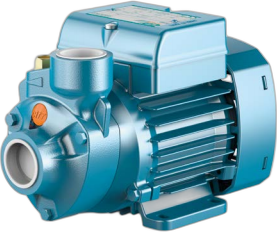
- Drawback: little or no natural pressure. A booster pump is often added to feed the taps.
Installation tips, wherever it goes:
- Place the tank on a flat, clean surface, free of stones or ridges that could wear it from below.
- Keep access to the lid (for filling and cleaning) and to the drain valve.
- A closed model with a lid, like the 250 L white tank, protects the water from dust and insects.
What to Check Before Buying
Before confirming your purchase, run through this quick checklist:
- Does the capacity match your household and your cuts? (revisit the calculation above)
- Do the dimensions fit the intended spot? Measure ceiling height and access (door, stairs). Examples: the 1000 L is Ø112 × H132 cm, the 500 L is Ø87 × H105 cm, the 250 L is Ø63 × H118 cm.
- Is the material food-grade and UV-treated? (essential for drinking water in the sun)
- Does the tank come with a drain valve? Our Rotosat models do.
- Is there a well-fitting lid to keep the water clean?
Factors That Affect the Price
A tank's price varies mainly by:
- Capacity: the primary factor. Larger volume means more material, so a higher price. Backup models (250 L) are the most affordable.
- Number of layers: a triple-layer costs more than a single-layer at equal volume, because it offers better protection.
- Material and treatment: food-grade HDPE with UV treatment is more durable than basic plastic — and better value over time.
- Fittings: valve, lid, any accessories.
Prices move regularly with raw-material costs. So we prefer not to post a fixed figure here: check the up-to-date price directly on the product page. You'll find the full range on our water tanks page.
And After the Purchase: Maintenance
A well-maintained tank keeps water healthy for years. Just rinse and disinfect it once or twice a year, and check the lid. We walk you through the method step by step in our guide how to clean and maintain your water tank. Finally, to keep water at home during outages, read managing a water cut with your tank.
In Summary
Choosing a tank is mainly about sizing it well (150 L/person/day × days of autonomy), picking a food-grade, UV-treated material, and installing it on a solid support suited to the pressure you want.
At Sanitech, in Siliana, we offer Rotosat Industry tanks from 150 L to over 2000 L, certified food-grade by the Ministry of Health, with delivery throughout Tunisia and cash on delivery. Unsure about size or installation? Our team advises you at +216 55 793 122.